Earning on Both Sides: How to Build a Hybrid Income Strategy Combining Active Trading and Crypto Staking
The conventional framing of crypto investing tends toward extremes. On one side sits the active trader, glued to charts, chasing momentum, and measuring success in daily percentage moves. On the other sits the long-term holder, stacking assets through every cycle with serene indifference to short-term noise. Both archetypes have produced genuine wealth. Both have also produced spectacular losses when applied without discipline.
What the conventional framing misses is the increasingly compelling middle path: a hybrid approach that deploys active capital where the risk-reward merits it, while simultaneously generating passive yield on assets that are not currently positioned for active trades. For US investors willing to think architecturally about their crypto portfolio, this model offers something neither pure strategy can deliver alone — consistent income that does not depend entirely on being right about market direction.
The Case Against All-or-Nothing Positioning
Human psychology tends to push investors toward binary thinking. You are either bullish or bearish. You are either trading or holding. This cognitive tendency, well documented in behavioral finance research, often leads to suboptimal capital allocation. A portfolio that is 100% deployed in active trading is fully exposed to the psychological pressure of drawdowns. A portfolio that is 100% staked or locked in yield protocols misses the asymmetric opportunities that volatile markets periodically present.
The hybrid model acknowledges that different portions of a portfolio can serve different functions simultaneously. Active trading capital works to generate alpha — returns above the baseline market performance. Yield-generating capital works to produce income that compounds regardless of whether the broader market is advancing or retreating. Together, they create a structure where a poor trading month does not necessarily translate into a negative overall period.
Understanding the Yield Landscape
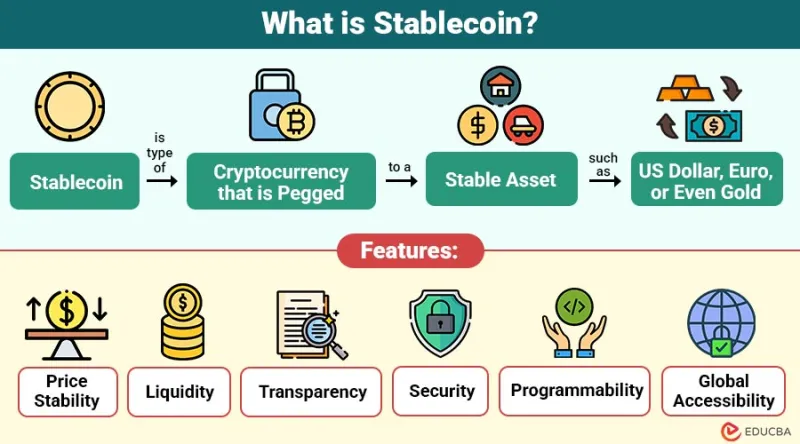
For US investors, passive yield in crypto currently flows from several distinct mechanisms, each carrying its own risk profile and regulatory treatment.
Proof-of-Stake Validation involves locking tokens to support network consensus on blockchains like Ethereum, Solana, or Cardano. In exchange, validators receive newly issued tokens as compensation. Yields vary considerably by network and current staking participation rates, but annual percentage rates in the range of 3% to 8% are common on established networks. The key distinction for US tax purposes is that staking rewards are generally treated as ordinary income at the time of receipt, based on the fair market value of the tokens when they are earned.
Lending Protocols allow investors to supply assets to decentralized or centralized lending platforms, earning interest from borrowers. Rates fluctuate with demand and are typically paid in the same asset supplied. Tax treatment mirrors staking in most respects — interest income is recognized as ordinary income when received.
Liquidity Provision on decentralized exchanges introduces additional complexity. Providing liquidity to trading pairs can generate fee income, but it also exposes the provider to impermanent loss — a reduction in the dollar value of the position relative to simply holding the underlying assets. This mechanism is best approached by investors who have taken the time to understand its mechanics thoroughly.
Constructing the Allocation
A functional hybrid strategy begins with a deliberate allocation decision rather than an ad hoc accumulation of positions. Before deploying capital, the investor should define what percentage is intended for active trading, what percentage is earmarked for yield generation, and what percentage — if any — is held as dry powder for opportunistic deployment.
A reasonable starting framework for a moderately active US retail investor might allocate 40% to 50% of crypto holdings toward yield-generating positions across one or two protocols or staking arrangements, 30% to 40% toward an active trading book, and 10% to 20% in reserve. These proportions are not prescriptive — they should reflect individual risk tolerance, time availability, and market conditions — but they illustrate the principle of deliberate segmentation.
The psychological benefit of this structure is underappreciated. Knowing that a substantial portion of the portfolio is generating income regardless of trading outcomes reduces the emotional pressure on individual trades. Traders who feel compelled to force activity — taking suboptimal setups because they feel idle — often do so because their entire financial narrative depends on each trade. A yield-generating foundation changes that dynamic.
When to Lean Active, When to Lean Passive
Market conditions should influence the balance between active and passive positioning, though not through reactive, emotional adjustments. A more systematic approach involves identifying conditions that historically favor active participation versus those that favor yield accumulation.
Trending markets with clear directional momentum, expanding volume, and confirmed breakouts from established ranges tend to reward active trading. In these environments, the opportunity cost of having too much capital locked in fixed-yield positions is real. Conversely, range-bound or directionless markets — periods where price action churns without conviction — tend to punish active traders through repeated false signals while steady yield accumulation continues unaffected.
This does not mean attempting to perfectly time a rotation between strategies. Rather, it suggests that investors review their allocation periodically and consider modest adjustments based on prevailing conditions, maintaining enough flexibility to capture opportunity without abandoning the income foundation.
Tax Implications: A US-Specific Consideration
The tax treatment of hybrid income strategies requires careful attention for US investors, as the IRS applies different rules to different income types.
Capital gains from trading are classified as short-term (taxed as ordinary income if the holding period is under one year) or long-term (taxed at preferential rates for holdings exceeding one year). For active traders, the majority of gains will typically qualify as short-term, meaning they are taxed at the same rate as wages and salary.
Staking and lending income, by contrast, is treated as ordinary income at the time of receipt — regardless of whether the investor sells the earned tokens. This creates a tax obligation even when the investor intends to hold the rewards long-term. When those rewards are eventually sold, a second taxable event occurs, this time as a capital gain or loss based on the difference between the sale price and the value at the time of receipt.
This layered tax structure reinforces the importance of meticulous record-keeping. US investors engaged in hybrid strategies should track not only purchase and sale dates for traded assets, but also the fair market value of every staking reward or interest payment at the time of receipt. Crypto-specific tax software and consultation with a tax professional familiar with digital assets are strongly advisable for anyone operating a meaningful hybrid strategy.
The Compounding Advantage
Perhaps the most powerful argument for the hybrid model is the compounding effect of reinvested yield. A trader who earns 5% annually through staking on half their portfolio and reinvests those rewards is effectively lowering their cost basis across the entire portfolio over time. In a market where assets can appreciate significantly across cycles, that compounding foundation can contribute meaningfully to total returns even if the active trading component performs only modestly.
The investors who tend to build durable wealth in digital asset markets are not exclusively the most aggressive traders or the most patient holders. They are often the ones who build structures — diversified across strategies, income types, and time horizons — that generate returns under multiple conditions. The hybrid model is one of the cleaner expressions of that philosophy, and for US investors willing to engage with its mechanics and its tax implications, it represents a genuinely compelling framework for navigating a market that rarely stays still.