Platform First: How the Exchange You Choose Quietly Shapes Every Trade You Will Ever Make
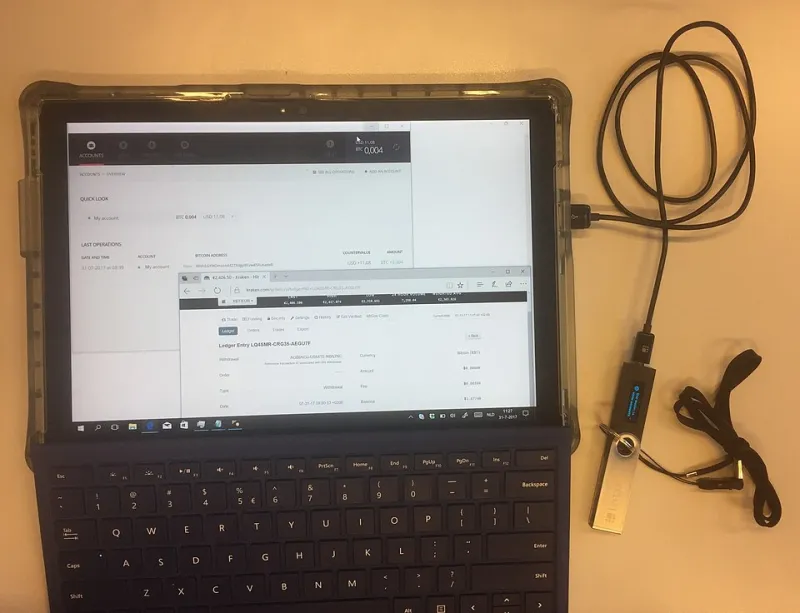
Photo: FlippyFlink, CC BY-SA 4.0, via Wikimedia Commons
The Decision That Precedes Every Other Decision
There is a particular irony embedded in how most retail cryptocurrency traders approach their first steps in the market. They spend hours studying chart patterns, researching assets, and calibrating risk tolerance — and then select an exchange based on a social media recommendation or a promotional bonus. The platform they choose will sit beneath every trade they make, shaping outcomes in ways that accumulate silently and substantially over time.
In traditional equity markets, the concept of best execution — the obligation to secure the most favorable terms reasonably available for a client order — is a regulated standard. In cryptocurrency markets, no such mandate exists for retail traders. The burden of selecting an exchange that genuinely serves your interests falls entirely on you. Understanding what to evaluate before that choice is made is, in the truest sense, your first trade.
The Fee Structure Is Rarely What It Appears
Exchanges compete aggressively on headline trading fees, and many US-based platforms now advertise zero-commission or low-fee structures. These figures, while technically accurate, rarely represent the full cost of operating on a given platform.
Spread disparities are the most pervasive hidden cost. The spread is the difference between the best available bid price and the best available ask price on an order book. On a high-liquidity platform with deep order books, the spread on a major pair like BTC/USD might be $1 to $5. On a less liquid platform, that same spread might be $30 to $80. A trader executing $10,000 in round-trip volume daily on a platform with a $50 average spread is absorbing $50 in implicit cost per round trip — $18,250 annually — before a single fee is charged.
Withdrawal fees represent another category that traders frequently underestimate. Moving assets off an exchange — whether to a hardware wallet, a DeFi protocol, or another platform — carries a fee that varies significantly across providers. Some exchanges charge flat fees per withdrawal; others charge percentages. For traders who regularly move assets between platforms to capitalize on arbitrage or to manage custody, these fees compound quickly.
Funding delays carry an opportunity cost that is harder to quantify but equally real. If depositing via ACH bank transfer takes three to five business days on one platform while another offers instant deposit via debit card or wire, the trader using the slower platform may miss time-sensitive market conditions entirely. In a market that moves 10% in a single afternoon, a two-day funding delay is not an inconvenience — it is a structural disadvantage.
Order Execution Speed and Slippage: Where Milliseconds Have Dollar Values
For active traders, the time between placing an order and having it filled — and the price at which it fills — has direct financial implications. Slippage occurs when an order executes at a price different from the quoted price at the moment the order was placed. In fast-moving markets, slippage on a $50,000 order can run into hundreds of dollars on a single trade.
Execution speed varies meaningfully across platforms. Centralized exchanges with institutional-grade matching engines and co-located servers generally offer faster execution and lower slippage on liquid pairs. Platforms that route orders through third-party liquidity aggregators may introduce additional latency.
For traders executing high-frequency or momentum-based strategies, these variables are not marginal. A platform that consistently fills market orders with 0.05% slippage versus one averaging 0.2% slippage represents a 0.15% per-trade cost differential. At $1 million in annual trading volume, that differential is $1,500 — and that is a conservative estimate for an active trader.
The practical step here is to test execution quality empirically. Place identical market orders of moderate size on two platforms during a period of elevated volatility and compare the fill prices against the quoted price at the moment of order submission. The results are often revelatory.
Security Architecture: The Trade-Off You Are Always Making
Every convenience feature an exchange offers — instant withdrawals, simplified onboarding, connected payment apps — exists on a spectrum opposite to security. Understanding where a platform sits on that spectrum is not a paranoid concern; it is a fiduciary one.
US-based exchanges that hold customer funds are subject to varying levels of regulatory oversight depending on their licensing structure. Platforms registered as Money Services Businesses with FinCEN and holding state money transmitter licenses operate under compliance frameworks that provide some degree of consumer protection. Exchanges that are also registered with the SEC or CFTC face additional oversight relevant to the asset types they offer.
Beyond regulatory status, evaluate the following when assessing a platform's security posture:
- Proof of reserves: Does the exchange publish independently verified proof that customer assets are held 1:1? Post-FTX, this has become a baseline expectation among informed traders.
- Cold storage ratio: What percentage of customer funds are held in offline, cold storage versus hot wallets? A higher cold storage ratio reduces exposure to exchange-level hacks.
- Insurance coverage: Does the exchange carry crime insurance or maintain a reserve fund to compensate customers in the event of a security breach? The specifics of coverage limits and conditions matter significantly.
- Two-factor authentication and withdrawal whitelisting: These user-level controls are standard on reputable platforms and should be considered non-negotiable.
The convenience of keeping assets on an exchange for fast execution comes with custodial risk that self-custody eliminates. Serious traders typically maintain only the capital necessary for active trading on exchange, with the remainder held in hardware wallets.
Liquidity Depth and the Pairs That Matter to You
A platform's liquidity is not uniform across all trading pairs. An exchange may offer deep, competitive liquidity on BTC/USD and ETH/USD while maintaining thin, wide-spread order books on altcoin pairs. If your trading strategy involves assets beyond the top five by market capitalization, the liquidity profile of your chosen exchange for those specific pairs is the relevant metric — not the platform's aggregate volume.
Review the order book depth for your most frequently traded pairs during both high-activity and low-activity market hours. A platform that offers acceptable liquidity during peak US trading hours may have significantly degraded conditions during overnight sessions.
Choosing With Intention
The exchange selection process, approached with the same rigor applied to asset selection, should involve a structured comparison across at least four dimensions: total cost of operation (trading fees plus spreads plus withdrawal fees), execution quality, security architecture, and liquidity depth in the pairs you trade most.
At Exchange777, we operate from the conviction that informed traders make better decisions at every level — and that the foundation of informed trading begins with knowing exactly where your trades are being executed and what that environment costs you. The platform is not a neutral backdrop to your strategy. It is an active variable in your performance equation.
The most successful traders we observe treat the exchange relationship as a professional partnership, not a default. They evaluate it periodically, benchmark it against alternatives, and are not reluctant to migrate when a better structure is available. That discipline — applied before the first trade, and revisited regularly — is itself a form of alpha.