Moving Water: How to Detect Institutional Order Flow Before It Reshapes the Market
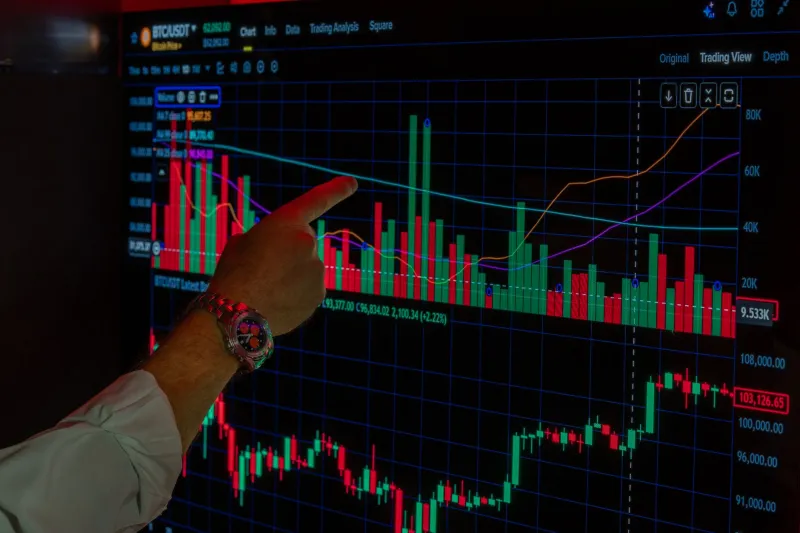
In any liquid market, the largest participants leave traces. A ship displaces water long before its wake reaches the shore, and institutional crypto buyers operate by a similar principle. Their transactions are large, their timelines are deliberate, and their positioning—when read correctly—can offer retail traders an informational edge that no price chart alone can provide.
Understanding how to detect and interpret these large order flows is not a speculative exercise. It is a discipline rooted in data, patience, and the systematic reading of market structure. For US traders operating in an environment shaped by both retail enthusiasm and growing institutional participation, this skill has become increasingly consequential.
Why Institutional Behavior Differs from Retail Activity
Retail traders tend to react. They enter positions after price moves, respond to news cycles, and often exit at the worst possible moments. Institutional participants—hedge funds, family offices, corporate treasury desks, and high-net-worth aggregators—operate on a fundamentally different timeline. Their position sizes make rapid entry and exit impractical. Executing a $50 million Bitcoin purchase through a single market order would immediately drive price against the buyer, a phenomenon known as market impact.
To minimize this cost, institutional actors distribute their orders across time and venue. They use over-the-counter desks, algorithmic execution strategies, and dark pool equivalents within crypto infrastructure. The result is a series of smaller, seemingly unrelated transactions that collectively represent a massive directional bet. Recognizing this pattern before the full position is assembled is the core objective of order flow analysis.
On-Chain Analytics: The Ledger Does Not Lie
Blockchain's defining characteristic—its public, immutable transaction record—creates an intelligence layer unavailable in traditional financial markets. Every large wallet movement, exchange deposit or withdrawal, and inter-address transfer is permanently recorded and timestamped.
Several on-chain metrics are particularly relevant for detecting institutional accumulation or distribution:
Exchange Net Flow measures the difference between coins entering and leaving centralized exchanges. When significant volumes of Bitcoin or Ethereum move off exchanges into cold storage wallets, it typically signals that large holders are removing supply from the tradable float—a classic accumulation signature. Conversely, large inflows to exchanges often precede selling pressure as holders position assets for liquidation.
Whale Wallet Tracking involves monitoring addresses known to hold substantial balances. Platforms that specialize in on-chain data allow users to set alerts when specific wallets transact above defined thresholds. Sudden activity from dormant large wallets—those that have not moved coins in months or years—frequently precedes significant price events.
Realized Cap and HODL Waves provide a macro view of how long coins have been stationary. When older coins begin to move, it indicates that long-term holders are either taking profits or repositioning, both of which carry directional implications.
For US traders, integrating these data points into a daily pre-market review can meaningfully improve the quality of entry and exit decisions.
Reading the Order Book for Institutional Fingerprints
On-chain data reveals what has already happened. Order book analysis offers a more real-time window into what large participants are attempting to do.
Institutional accumulation frequently manifests as iceberg orders—large bids that refresh repeatedly at a specific price level, absorbing sell pressure without fully revealing their total size. When the visible bid quantity at a particular price consistently replenishes after partial fills, it suggests a programmatic, large-scale buyer operating at that level.
Spoofing, while illegal in regulated US equity markets and increasingly scrutinized in crypto, still occurs across certain venues. Large orders placed and quickly canceled can create artificial impressions of support or resistance. Distinguishing between genuine institutional bids and manipulative spoofing requires observing whether orders actually execute or consistently disappear before being filled.
Pay particular attention to bid-ask imbalances in the depth book. When the cumulative bid volume significantly outweighs ask volume across the top ten price levels, it suggests buyers are absorbing available supply—a precursor to upward price movement. The reverse configuration often precedes declines.
Accumulation and Distribution Patterns: What They Look Like in Practice
Institutional accumulation rarely occurs in a straight line. Large buyers deliberately suppress price volatility during their entry phase to avoid driving up their own average cost. This creates recognizable market behavior:
- Tight price ranges with elevated volume: When price consolidates within a narrow band while trading volume remains elevated, a large buyer may be systematically absorbing sell orders.
- Repeated tests of support without breakdown: Each failed breakdown attracts more retail sellers, whom the institutional buyer absorbs, strengthening the eventual move upward.
- Declining volatility preceding a breakout: As the accumulation phase nears completion, volatility compresses. The subsequent breakout—when the buyer stops suppressing price—often appears sharp and surprising to traders who were not tracking the underlying flow.
Distribution follows a mirror logic. Large sellers often offload into strength, using retail buying momentum as exit liquidity. Elevated volume near resistance levels, repeated failures to sustain new highs, and gradual deterioration in bid depth are common signatures.
Constructing a Practical Monitoring Framework
The volume of available data can be paralyzing without a structured approach. A practical framework for US retail traders might include the following components:
-
Daily on-chain review: Check exchange net flows for Bitcoin and Ethereum. Note any significant movements from large wallets flagged by analytics platforms.
-
Pre-session order book scan: Before active US trading hours, examine depth book imbalances on major pairs. Note any persistent large bids or asks that appear to be refreshing.
-
Volume-price relationship assessment: Compare current volume against the 30-day average. Accumulation and distribution both tend to occur on above-average volume during consolidation phases.
-
Whale alert integration: Use automated alerts for large on-chain transactions. A single large transfer does not constitute a trading signal, but a cluster of related movements within a short window warrants closer attention.
-
Cross-exchange price divergence: Temporary price differences across exchanges can indicate that a large buyer or seller is working through a specific venue, creating localized supply-demand imbalances.
The Limits of This Approach
Order flow analysis is probabilistic, not deterministic. Institutional actors adapt their execution strategies, and the same pattern can precede both a breakout and a failed move. On-chain data reflects settlement, not intent—a large transfer to an exchange could represent a sale or simply a custody change.
This framework is most effective when combined with broader market context: macroeconomic conditions, regulatory developments, and the general sentiment cycle. Treated as one input among several rather than a standalone signal, institutional order flow analysis can meaningfully enhance the quality of trading decisions.
Conclusion
The crypto market's transparency is both its gift and its discipline test. The data exists to read institutional positioning before it fully manifests in price—but doing so requires consistency, analytical rigor, and the patience to wait for confirmation rather than react to noise.
For traders who commit to developing this capability, the reward is a meaningful informational advantage: the ability to position alongside the market's largest participants rather than against them. At Exchange777, the tools and market depth to act on that intelligence are available. The analytical discipline, however, must be built trade by trade.