Billions on the Screen, Nothing in the Book: How Fabricated Volume Metrics Are Costing US Traders Real Money
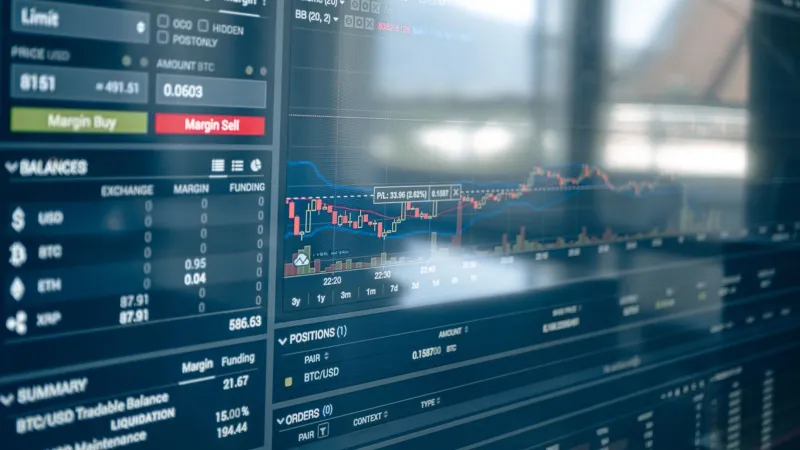
Open any cryptocurrency data aggregator and the numbers are staggering. Exchanges routinely report daily trading volumes in the tens or even hundreds of billions of dollars. For the retail trader evaluating where to place capital, those figures feel like a proxy for safety—a high-volume venue, the reasoning goes, must offer tight spreads, deep books, and reliable execution. That reasoning is dangerously flawed, and the gap between headline volume and executable liquidity has quietly drained the accounts of US traders who never thought to question what they were reading.
The Mechanics Behind Inflated Volume
Wash trading is the dominant culprit. In traditional securities markets, wash trading—buying and selling the same asset to yourself or a coordinated counterparty to manufacture the appearance of activity—is a federal offense regulated by the Commodity Futures Trading Commission and the Securities and Exchange Commission. In cryptocurrency markets, enforcement has historically been fragmented, creating a permissive environment that some exchanges have exploited aggressively.
The structure is straightforward. A trading desk, often affiliated with or incentivized by the exchange itself, executes matched buy and sell orders in rapid succession. No genuine transfer of risk occurs. No price discovery takes place. The only artifact is a volume number that climbs, attracting attention from aggregators and retail traders who use volume as a quality signal.
Circular trading is a variation on the same theme. Here, a chain of accounts—sometimes across multiple entities—passes an asset around in a loop. Each leg registers as a legitimate trade on the exchange's internal ledger. The asset returns to its origin point, but the reported volume has multiplied with every circuit. When third-party data platforms ingest these figures without on-chain verification, the inflation passes undetected into the metrics that traders consult daily.
Why Retail Traders Bear the Consequences
The damage is not abstract. When a US retail trader selects an exchange based on reported volume and then attempts to execute a position of any meaningful size, several things can happen—none of them favorable.
First, the bid-ask spread widens dramatically under real order flow. An exchange that appears highly liquid during low-urgency periods may have its book supported almost entirely by market makers who pull quotes the moment genuine directional pressure appears. The trader who expected to buy at the inside ask discovers that filling even a modest order requires walking up several price levels, incurring slippage that was invisible on the order book snapshot they reviewed before placing the trade.
Second, order book depth—the stacked bids and offers beyond the inside market—proves inconsistent. Depth that appears stable during off-peak hours may evaporate during high-volatility windows, precisely when a trader most needs liquidity to enter or exit a position. This is not random. Algorithmic market makers are programmed to reduce exposure when uncertainty spikes, and on exchanges where genuine organic flow is thin, that withdrawal is total rather than partial.
Third, the trader's execution data tells a story that the exchange's published metrics never will. Fills arrive at prices meaningfully worse than the last-traded price, average execution times lengthen, and partial fills become common even on orders that should clear instantly given the reported depth.
The Audit Framework Every US Trader Should Apply
Verifying real liquidity before committing capital requires moving beyond dashboard metrics and applying a structured evaluation process.
Bid-Ask Spread During Off-Peak Hours
US traders should query the spread on any exchange they are evaluating not just during peak activity windows, but specifically during low-volume hours—typically late Sunday night into early Monday morning Eastern Time, and the hours immediately following major US market closes. A genuinely liquid venue maintains reasonably tight spreads across the full trading day. An exchange whose spreads balloon by 300 to 500 percent during quiet periods is revealing the true depth of its organic order flow.
Order Book Depth Consistency Over Time
A single snapshot of the order book is nearly meaningless. Traders should sample depth at the same price levels—say, within one and two percent of the mid-price—at multiple points across a 48-hour window. Genuine depth is relatively stable. Artificial depth, supported by programmatic quotes that exist primarily to inflate visual impressions, fluctuates erratically and tends to collapse during any period of actual volatility.
On-Chain Settlement Verification
This is the most powerful tool available to skeptical traders. For assets that settle on public blockchains, on-chain data provides an independent record of actual transfer activity. If an exchange reports $4 billion in daily Bitcoin volume but on-chain settlement data corresponding to that venue shows a fraction of that figure in actual blockchain transactions, the gap is a direct indicator of internal matching that never moved assets—the signature of wash trading at scale.
Several independent research firms and blockchain analytics providers publish comparative analyses of reported versus on-chain-verified volume. US traders should treat these reports as mandatory reading before allocating to any new venue.
Slippage Testing With Small Orders
Before committing significant capital, execute a series of small market orders across different times of day and measure the actual fill price against the best available quote at the moment of submission. The difference—slippage—reveals the true cost of liquidity on that platform. Scale those findings to the position sizes you intend to trade. A venue that looks cheap at $500 order sizes may become prohibitively expensive at $50,000.
Regulatory Context for US-Based Traders
The regulatory environment is shifting. The CFTC has brought enforcement actions related to wash trading in cryptocurrency derivatives markets, and the SEC's expanded focus on digital asset platforms has increased scrutiny of reporting practices. Several states have also enacted disclosure requirements that touch on volume reporting accuracy for exchanges operating within their jurisdictions.
This matters practically: exchanges that prioritize compliance with US regulatory standards have a structural incentive to report accurately, because the consequences of misrepresentation have become material. Traders who favor venues with demonstrable regulatory engagement—those that publish independently audited volume reports or participate in data verification initiatives—are selecting for a form of institutional credibility that has real implications for execution quality.
Applying a Liquidity-First Framework
The instinct to equate high reported volume with superior trading conditions is understandable. Volume has always served as a reasonable proxy for liquidity in regulated markets with robust oversight. In cryptocurrency, that shortcut fails often enough to be dangerous.
A liquidity-first evaluation framework inverts the usual approach. Rather than beginning with volume rankings and working downward, it begins with verifiable execution quality—spread consistency, depth stability, on-chain settlement correlation—and uses reported volume only as a secondary reference point to be validated rather than accepted.
For traders operating on Exchange777, this discipline translates directly into better entry and exit prices, reduced slippage on meaningful position sizes, and the confidence that the liquidity displayed in the interface reflects what will actually be available when the trade is placed. Volume numbers are a starting point for analysis, not a conclusion. Treat them accordingly, and the market's real structure—rather than its reported one—becomes the basis for every decision you make.