Crowded at the Top: How Trading Volume Concentration on Major Exchanges Creates Edge—and Exposes Risk—for US Retail Traders

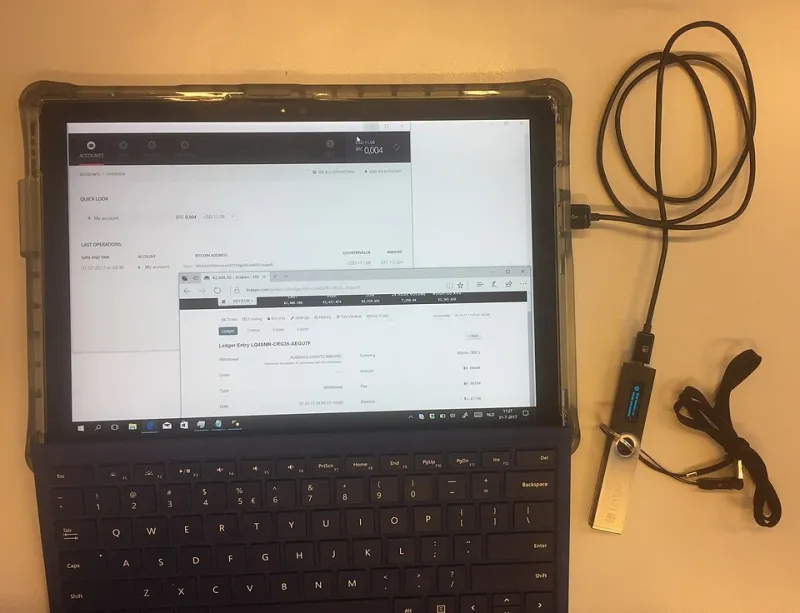
Photo: Cataleirxs, CC BY-SA 3.0, via Wikimedia Commons
Cryptocurrency markets have never been perfectly distributed. Since Bitcoin's earliest trading days, volume has gravitated toward a handful of platforms, leaving dozens of smaller exchanges operating in relative obscurity. Today, that pattern has intensified. A small number of venues—Binance, Coinbase, OKX, and a few others—routinely account for a disproportionate share of global spot and derivatives activity. For US retail traders, this concentration is neither simply good nor simply bad. It is a structural reality that, when understood clearly, can be leveraged for genuine advantage—or avoided before it becomes a liability.
The Mechanics of Volume Concentration
When traders collectively migrate toward dominant platforms, they create a self-reinforcing cycle. Higher volume attracts tighter bid-ask spreads, which in turn draws more participants seeking efficient execution, which further tightens spreads. On the surface, this looks like a pure benefit. Liquid markets are generally safer markets, and most introductory trading guides will correctly point beginners toward high-volume venues for exactly this reason.
But the picture grows more complicated beneath that surface layer. Dominant exchanges are not passive conduits for price discovery—they are active participants in shaping it. When an overwhelming majority of order flow passes through a single venue, that platform's internal matching engine, fee structures, and order book depth begin to exert outsized influence over the prices that everyone else follows. Smaller platforms, rather than setting independent prices, often anchor their quotes to the dominant exchange's last traded price. The result is a kind of price sovereignty that concentrates enormous informational power in very few hands.
Where the Edge Hides: Smaller Platforms and Timing Asymmetries
Paradoxically, the very dominance of large exchanges creates exploitable inefficiencies at the margins. When a major market event occurs—a Federal Reserve rate decision, a high-profile regulatory announcement, or a sudden whale movement on-chain—large platforms absorb the initial shock quickly. Their deep order books adjust almost instantaneously. Smaller or mid-tier exchanges, however, often lag. Their thinner liquidity means that price updates propagate more slowly, and their matching engines may not process external signals at the same speed.
This lag, even when measured in seconds, represents a genuine arbitrage window. Traders who monitor price differentials across multiple venues simultaneously—using tools that aggregate real-time data from several exchanges—can identify moments when an asset trades at meaningfully different prices across platforms. Executing a buy on the lagging exchange while hedging or selling on the leading one captures the spread before the market corrects.
This is not a theoretical exercise. Quantitative research into intraday crypto pricing consistently documents persistent, if brief, price dislocations between major and minor exchanges. For US traders operating within a regulatory framework that limits access to certain offshore platforms, the domestic landscape still offers enough venue diversity to make cross-platform monitoring worthwhile.
The Counterintuitive Dangers of Following the Crowd
Concentration of volume on dominant platforms carries risks that rarely appear in beginner trading guides. Three deserve particular attention.
Slippage at Scale. It may seem that the deepest order books guarantee the best execution. In practice, large retail orders—even those that seem modest relative to daily volume—can move prices more than expected when executed through market orders on a crowded book. During periods of elevated volatility, the bid-ask spread on even the largest exchanges can widen dramatically, and market orders placed in haste may fill at prices several percentage points away from the quoted rate. Limit orders and careful position sizing remain essential disciplines regardless of where a trader operates.
Manipulation Vectors. High-volume platforms attract sophisticated actors, including entities that engage in spoofing, layering, and wash trading. While US-regulated platforms face stricter enforcement from the Commodity Futures Trading Commission and the Securities and Exchange Commission, the sheer scale of order flow on dominant venues provides cover for manipulative strategies that are difficult to detect in real time. Retail traders who interpret large order book walls as genuine signals of market sentiment may be responding to manufactured pressure rather than authentic supply and demand.
Regulatory Concentration Risk. From a US regulatory perspective, the platforms that dominate volume are also the platforms most visible to federal and state enforcement agencies. When a dominant exchange faces a regulatory action—as several major platforms have in recent years—the downstream effects on traders can be severe and sudden. Account freezes, withdrawal delays, and forced liquidations have all materialized during high-profile enforcement episodes. Traders who concentrate all of their activity and holdings on a single dominant venue are exposed to this platform-level risk in ways that a diversified multi-exchange approach would mitigate.
Building a Multi-Venue Strategy Without Overcomplicating It
The practical implication for US retail traders is not to abandon high-volume platforms—their liquidity advantages are real and meaningful for most everyday transactions. Rather, the goal is to avoid treating any single exchange as the exclusive home for all activity.
A sensible approach involves maintaining primary trading activity on one or two well-regulated, high-liquidity venues while simultaneously monitoring price feeds from a broader set of platforms. When dislocations appear, a secondary account on a mid-tier exchange allows a trader to act on those windows without disrupting their primary strategy. This dual-layer setup also provides a natural hedge against platform-specific regulatory or technical disruptions.
For traders interested in emerging platforms, due diligence remains non-negotiable. Regulatory registration status, proof-of-reserves disclosures, insurance fund transparency, and historical uptime records should all factor into any decision to route capital through a less-established venue. The opportunity to capture a price dislocation is meaningless if the platform itself presents a withdrawal risk.
Reading the Volume Map as a Strategic Signal
Beyond execution mechanics, volume concentration data itself functions as a strategic indicator. When trading volume on dominant exchanges spikes relative to smaller venues, it often signals that institutional or high-frequency participants are driving the market. Retail traders who recognize this pattern can adjust their approach accordingly—widening their execution tolerance, reducing position sizes, or stepping back from the market entirely until the institutional wave passes.
Conversely, when smaller exchanges begin to show disproportionate volume growth relative to their historical baseline, it sometimes signals early-stage price discovery in a particular asset before the move propagates to the major platforms. Monitoring this kind of cross-venue volume divergence requires more effort than simply watching a single price chart, but the informational reward can be substantial.
The Structural Reality Every Trader Should Accept
Volume concentration in crypto markets is not a temporary anomaly—it is a persistent structural feature driven by network effects, regulatory barriers to entry, and the natural tendency of liquidity to attract more liquidity. US retail traders who treat this reality as a fixed backdrop, rather than a dynamic variable to be navigated, will consistently leave performance on the table.
The traders who consistently outperform their peers are rarely those who found the best single exchange. They are the ones who learned to read the entire venue landscape—understanding where prices lead, where they follow, and how the gaps between them occasionally open into genuine opportunity.